Airframes that match mission logic
From compact inspection rigs to long-range mapping platforms, airframe geometry changes endurance, stiffness, payload budget, and serviceability.
Explore modern aerial systems through frame design, propulsion, telemetry, flight control, and the circuit architecture that makes stable flight possible. This site is built for enthusiasts, engineers, buyers, and technical teams who want the whole stack in one place.
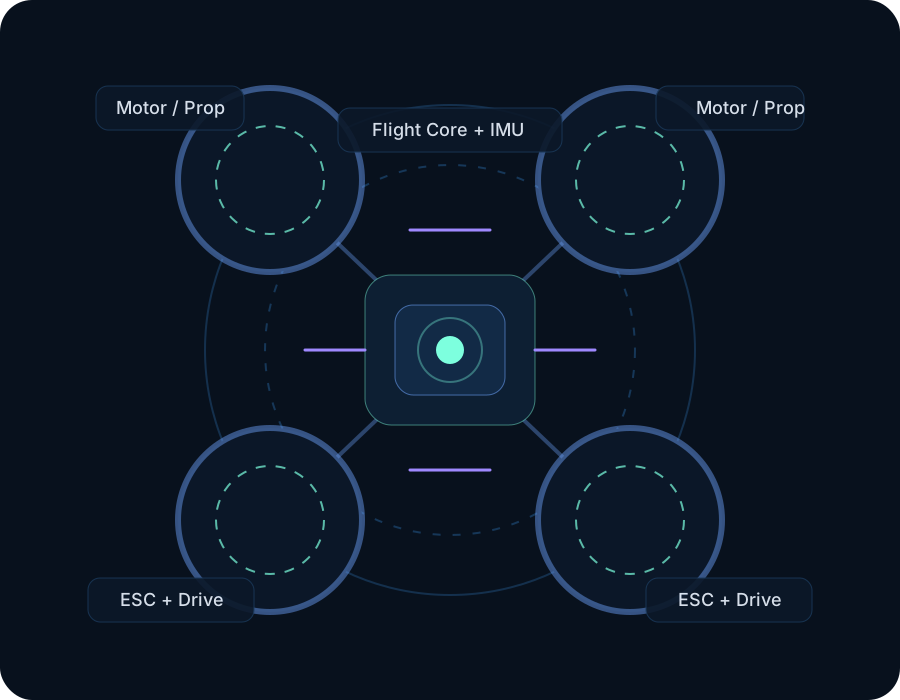
From compact inspection rigs to long-range mapping platforms, airframe geometry changes endurance, stiffness, payload budget, and serviceability.
Reliable drone performance comes from stable power rails, clean signal paths, sensible thermal margins, and fewer weak points in the wiring layout.
Telemetry, video, remote control, onboard sensing, and mission payloads only work well when the control stack and circuit decisions support them end to end.
A serious drone is a tightly coupled system. The frame, motors, propellers, ESCs, battery chemistry, flight controller, firmware, radio link, GPS, and payload all influence each other.
That is why fast specs alone are misleading. A powerful motor on a noisy power rail, a capable camera on a weak isolation mount, or a premium flight controller paired with sloppy wiring can still produce unstable results.
The circuit layer determines whether a drone feels precise or fragile. It decides how current moves, how sensors stay readable under noise, and how confidently the flight computer can react under load.
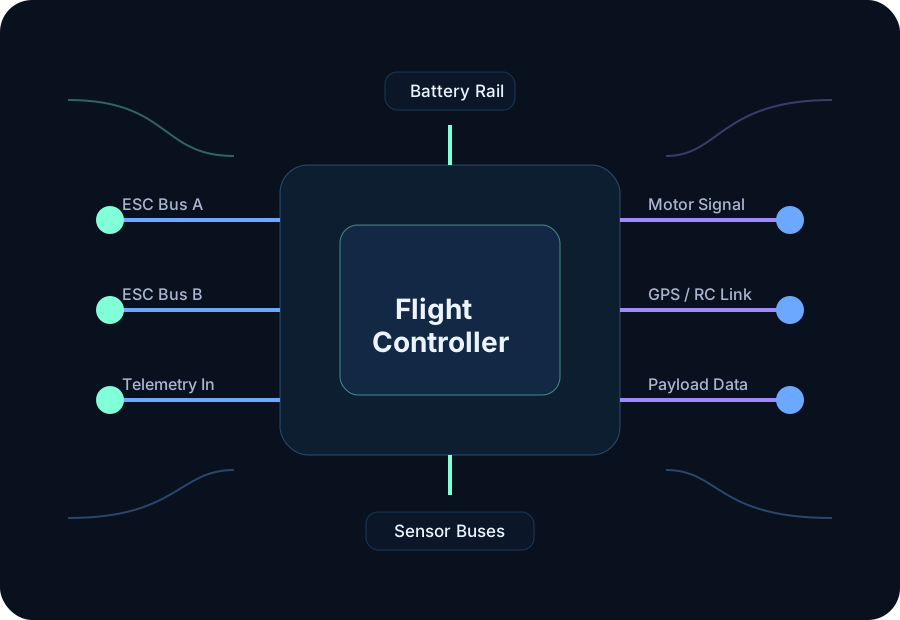
The battery is only the start. A clean drone power system must route high current efficiently to ESCs while protecting delicate avionics and sensors from sag, spikes, and electrical noise.
Well-designed power distribution reduces heat, improves service life, and helps the entire aircraft behave consistently from takeoff to landing.
ESCs convert flight-controller commands into precise motor drive behavior. Their switching quality, firmware behavior, and thermal tolerance directly affect response, smoothness, and efficiency.
The tradeoff is simple: pushing harder for aggressive response raises thermal and electrical stress, so layout and cooling matter.
The flight controller fuses sensor data, interprets pilot or mission commands, and sends stable timing to the motor control layer. It relies on clean inputs and predictable power more than marketing labels suggest.
Board layout, filtering, clock stability, and connector quality matter just as much as processor class on many real builds.
Remote control, downlink telemetry, GPS, and payload data all compete for space, bandwidth, and signal integrity. Antenna placement and grounding decisions can improve range more than raw transmitter power.
Good routing avoids interference between digital noise, RF energy, and sensitive sensors.
IMUs, magnetometers, barometers, cameras, lidar, thermal sensors, and edge-compute payloads all change the electrical and mechanical profile of the aircraft.
Each added subsystem creates new power, EMI, balance, and latency tradeoffs, so integration discipline matters.
Small choices usually separate a dependable drone from a frustrating one: wire gauge, connector strain relief, capacitor placement, grounding strategy, soft-mounting, and accessible maintenance paths.
These are not cosmetic choices. They are what make repeatable performance possible.
High-stability drones shorten inspection time across towers, roofs, plants, and energy infrastructure while keeping operators farther from risk.
Survey platforms combine precise navigation, tuned propulsion, and calibrated imaging to turn flights into reliable geospatial data.
Engineering teams use modular drones to test autonomy, sensing, new communications links, and novel payload integration strategies.
Stable power delivery, vibration control, and well-balanced payloads matter as much as camera specs when cinematic flight is the goal.
Because the circuit layer determines signal quality, power stability, control precision, and fault tolerance. It is where many hidden failures start.
Predictable response, stable telemetry, clean power behavior, low vibration, solid thermal management, and hardware choices that make maintenance easier.
No. ESC quality helps, but it has to match motor load, firmware tuning, cooling, and the rest of the electrical design.
Treating wiring and power distribution as an afterthought. That usually creates noise, heat, voltage issues, and avoidable instability later.
Very. Bad placement can weaken range and telemetry quality even when the radios themselves are strong.
Usually not. The best builds are designed around a mission profile, then optimized for payload, endurance, agility, and maintainability around that goal.